DeFi Build Fine Machine Wey Dey Send Better Value Go Wrong Places
Na Pepper, Head of Marketing for Alephium write this one!
The matter wey dey inside this article na the author own opinion and e no necessarily be the official position of Alephium.
Polymarket get one better year wey we never see before for 2025, and the better growth still continue enter 2026.
The prediction market don reach around $3 billion revenue this year, and only Polymarket use him own hand gather over $1 billion, and dem dey expect am to enter $10 billion by 2030. As e be now Polymarket don already show say him be one of the most useful and interesting things wey Web3 don create, I go even talk say those estimates fit still no dey really show wetin Ploymarket don gather true true. Liquidity deep well well, users dey increase, and prediction markets don begin attract people wey no even dey inside crypto. The proof dey there gidigba: prediction volumes don increase sharply during the 2026 FIFA World Cup.
But Polygon $POL token — wey the people wey get am recently rename from $MATIC — unfortunately no follow the same direction.
Make I dey very careful here, because I no dey throw stone at the team. In fact, dem don build some of the most respectable infrastructure for this industry wey stand gidigba. Wetin I dey point out na simply the problem of fragmentation, na something wey DeFi industry strangely never really examine well well. My question be say: How one major dApp for big Layer-1 network fit succeed like mad, and as e dey happen, the token of the blockchain wey dey support am no really benefit from that success?
These two things no knack head together at all. As I go explain for this article, the way dem arrange many Layer-1 blockchains today fit use him own hand produce this kind awkward and scatter scatter result.
The Fragmentation Whala Get Name
I don spend almost nine years for this industry, and as the time dey go, I don watch this same pattern repeat himself across different market cycles. The thing don happen so many times to the point say e don stop to dey look like coincidence. This na how I dey see the problem:
A Layer-1 blockchain go attract developers, build better ecosystem of applications, and generate real usage.
As e be, the L1 go watch the value of all that activity comot through the top of the funnel, while application tokens and liquidity providers collect all the better benefit. But the base blockchain gon gor no come really become stronger economically.
The technical name for this kind matter na fragmentation. And e fit lead to situation where the native coin or token of the blockchain no go really benefit from the network activity wey e was supposed to support. And as you don already see from our informe about Powfi, this na something wey we believe say we don get solution for.
Think about wetin this kind fragmentation go mean for long-term holders:
• Wey believe in the blockchain.
• Wey hold the coin even when market hard gidigba.
• Talented developers wey build useful products on top of the blockchain gongor.
• Real trading volume and revenue dey generated. • But person own investment still underperform.
• Why? Because dem no design the economic system to send that success back to the base layer.
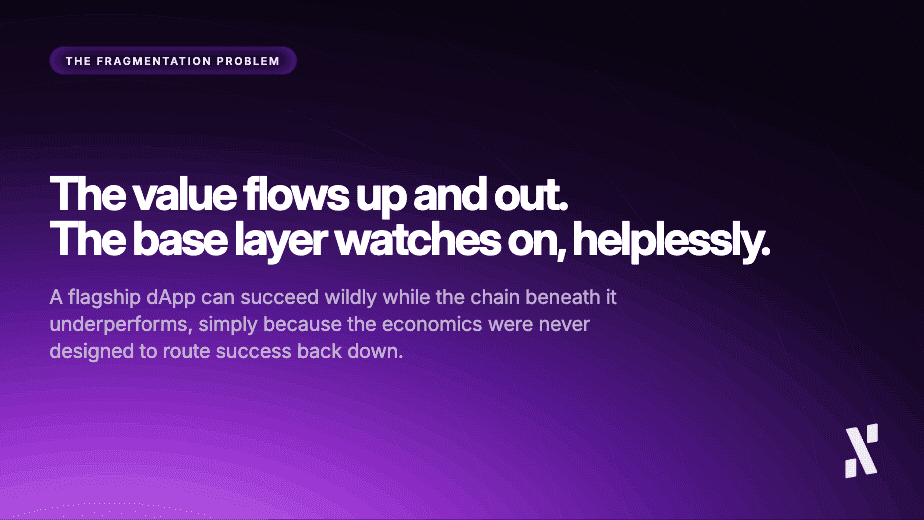
• The value dey flow upward and then comot.
• The base blockchain just dey watch, and e no get any power
This one no be Polygon-specific problem. Far from am. Na just Polygon I choose as example for this article. From the research wey I don do, this problem dey common well well among Layer-2 ecosystems wey dem build ontop Layer-1 networks like Ethereum, Solana and BNB Chain.
As e be now, when person use platform like Polymarket, users normally suppose hold the platform token, as for things like governance or fee-related purposes. But dApps wey be like this dey often use a collabo of off-chain matching and on-chain settlement. This one mean say them move much of the actual execution commot from the underlying blockchain, while dem still come dey use the blockchain to settle transactions. And because dem wan reduce market risk, users dey mostly transact with stablecoins wey be like USDC. So application tokens dey usually end up be token wey dem dey use do governance or speculation, wey get little fundamental connection to the actual blockspace revenue of the underlying blockchain.
As dem dey usually talk: Person wey no remember wetin happen before fit repeat the same mistake again. As e better reach, Alephium developers understand this issue well well. And dem don design Powfi to tackle this problem gon gor.
Why the Industry Never Fix Am
The reason this pattern still dey happen no be because the teams no sabi wetin dem dey do or suppose do. Commot m from your mind, Most of the people wey dey build Layer-1 networks na people wey their head correct well well and dem know book. Dem be technical people with strong development skills. The problem dey more with timing and priorities.
Carry yourself put for the position of a L1 builder. When you dey scatter ground dey compete to attract developers and capture market share, your priority go naturally be: composability, good developer tools, grants, incentives, and building the ecosystem. At that point, to make sure say the economics of every application align well well with the base protocol go become a second-level concern. The thinking go becomes say: “We go solve that one later.” But many times, that “later” no go come liae liae.
By the time wey the ecosystem don mature well well to waka back look the economics, the original decisions don already become deeply rooted. Application tokens don get their own communities gidigba. Dem don get their own incentive systems. Dem don get their own reasons why they no wan route value back to the base layer. And by that time, the opportunity to properly align everything go don hard well well. Builders go still tell themselves say: “As long as say TVL dey grow, everything dey okay be that.”
I don watch this kind thing happen across different ecosystems for many years wey I dey work for this industry. And e don make me put hand for chest believe say the blockchains wey go survive and remain strong for the long term na those wey open eyes engineer this economic alignment. Some networks dey build alignment into their architecture from the day wey dem start work. Others dey try to add am later through things like upgrades or governance proposals.
We for here dey do am with Powfi.
Wetin Alephium Dey Build Differently
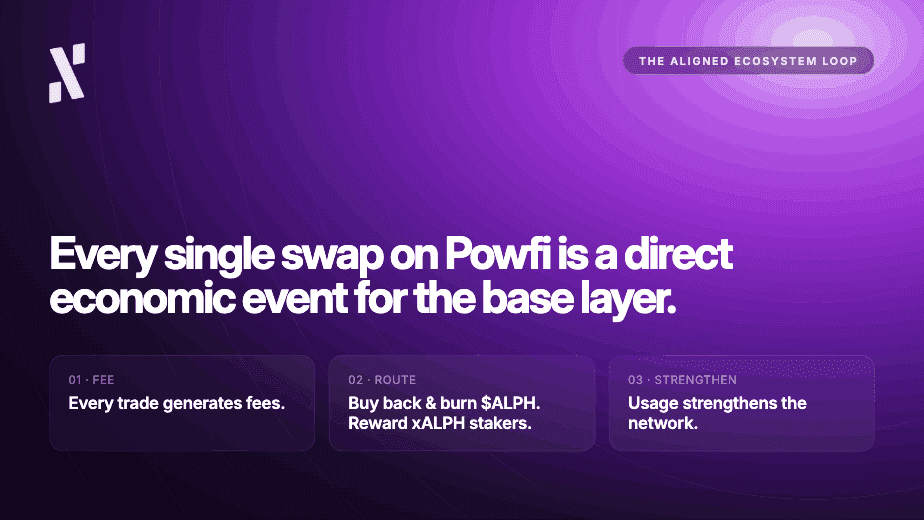
As we don already share for social media and this news page, the “Aligned Ecosystem Loop” na the heart of wetin Powfi dey bring. I wan explain am again with small grammar because the name fit make the thing sound like say na big big company talk when na every person matter. In reality, the idea dey simple:
Every trade on Powfi go generate fees.
Those fees no go remain only at the application layer.
Dem go use one percentage of the fees buy back and permanently burn $ALPH.
Dem go use another percentage distribute to xALPH stakers.
Every swap wey happen go come be direct economic event for the base blockchain.
So as the application dey succeed, the network dey also benefit from am.
Na him be the main idea behind the Aligned Ecosystem Loop. The mechanics himself dey elegant gidigba, but I believe say the principle behind am na the bigger thing. E means say: Powfi winning and $ALPH winning no be two different things atall. Na the same journey wey dem dey go. If Powfi succeed, Na him be say $ALPH and the wider Alephium ecosystem go get direct economic benefit. The network himself go benefit. The participants go benefit. The dApp builders go benefit sef. And the users go benefit. Na wetin we mean when we dey talk about to give una an “Aligned Ecosystem Loop” through on-chain mechanics.
Conviction Under Pressure
I don dey with Alephium for almost one year now. That one don give me enough time to see how the team dey handle real pressure to rush development, cut corners, or focus on short-term liquidity incentives instead of on sustainable economics. Even when many projects don decide to carry head put toward AI, Alephium dey still maintain him direction. As the team cool down work and publicly document their development process before the mainnet launch na deliberate effort. Yes, shipping the mainnet earlier for fit make some people happy wella.
But the team choose to take the time to build am well well. For me, the matter clear: If you no engineer your flywheel well well, e no go spin the way e suppose spin. E hard well well to add alignment later to a system wey dey originally designed without am. But e no dey impossible. If you do am well well, with enough logic and good architecture, you fit still achieve am. Both sequencing and architecture matter well well. The decisions wey the team dey make from the beginning dey important well well to wetin the blockchain dey eventually become. But even if the original model no dey perfect, e never dey too late to find innovative ways to create better economic alignment through new architecture.
Polymarket's Success and Polygon Polymarket success really dey impressive. I respect wetin dem build. But the fact say the success never translate into meaningful compounding for \(MATIC/\)POL holders na something wey I believe say dey unfortunate for both the builders and the holders. But make we no misunderstand the matter. This no mean say anybody get bad intention atall. No. Na simply the result of structural decisions wey dem make early. Those decisions don dey deeply embedded inside the system, and today e don dey difficult well well to reverse.
The Pattern Dey Everywhere
The Polymarket and Polygon situation no be special case atall. In fact, na one of the main patterns wey we dey see across DeFi today. E dey happen across plenti ecosystems. Most Layer-1 networks dey operate with similar models and dem dey hope say, somehow, the economics go eventually balance themselves.
Carry Pump.Fun do another example. The platform dey generate better transaction volume and millions of dollars for fees. But because Solana transaction fees dey cheap well well— just fractions of a cent — na very little $SOL dey get burnt from those activities. So although the platform dey bring plenti millions for dollar inside Alephium pocket, much of that value dey go directly to the platform creators. Wetin come be the result? Instead of make that value dey deeply locked into the Solana ecosystem through $SOL, the liquidity fit effectively flow commot from the base layer.
Another Example Be: BNB Chain and PancakeSwap Another better example na PancakeSwap on BNB Chain. PancakeSwap dey also generate better massive trading fees. But because $CAKE na part of him economic engine — wey dey include things like yield farming rewards, lottery activities and governance — traders dey only require a tiny amount of $BNB to pay gas fees. So plenti of the economic value wey dem gather around the application ecosystem dey end up flowing toward $CAKE instead of make e dey directly strengthening $BNB.
Make We Think About Games Me we think about almost any game wey dem build ontop blockchain. The game no dey normally use the blockchain's native token for the actual in-game economy. Instead, the blockchain dey simply acts like a database wey dey record assets and transactions. The developers dey create their own token and dem dey keep the in-game economy separate. So you fit get thousands of tiny transactions every day: fighting, crafting, buying, selling, trading items, and other in-game activities. Yet the transactions wey I mention for up fit provide almost zero direct economic benefit to the native token of the blockchain gongor wey dem make the game. For example, all those activities fit happen ontop BNB Chain and e no go meaningfully strengthening $BNB himself. That one na him be fragmentation.
Fragmentation Still Fit Get Solution
Some blockchain ecosystems go still find ways to solve this wahala. Others no go solve am. The networks wey build economic alignment directly into their architecture gongor from the beginning get structural advantage wey the industry never fully appreciate yet. I believe say as these ecosystems dey mature, the misaligned economic models go carry their hand reach their natural limits. And when e happen, the difference between aligned and fragmented ecosystems go dey much harder to ignore.
Eventually, the market data go tell the full story.... E dey always do am.
Disclaimer
This is a community-run blog for third-party contributors. The views expressed here are those of the authors and do not reflect the official Alephium project. This content is for informational purposes only and does not constitute financial, legal or investment advice. Cryptocurrency carries risk and is highly volatile. Information may be incomplete or outdated. Always conduct your own research. We disclaim liability for any loss or damage resulting from reliance on this article.